Contact us

Lloyd's Register live trial
confirms AI detection
gains at sea

AI navigation tested onboard, in real conditions

Shipping is in a moment of genuine change. AI-assisted watchkeeping is moving from pilot to practice, and the question fleet managers and insurers keep asking is a simple one: does the technology perform in real conditions?

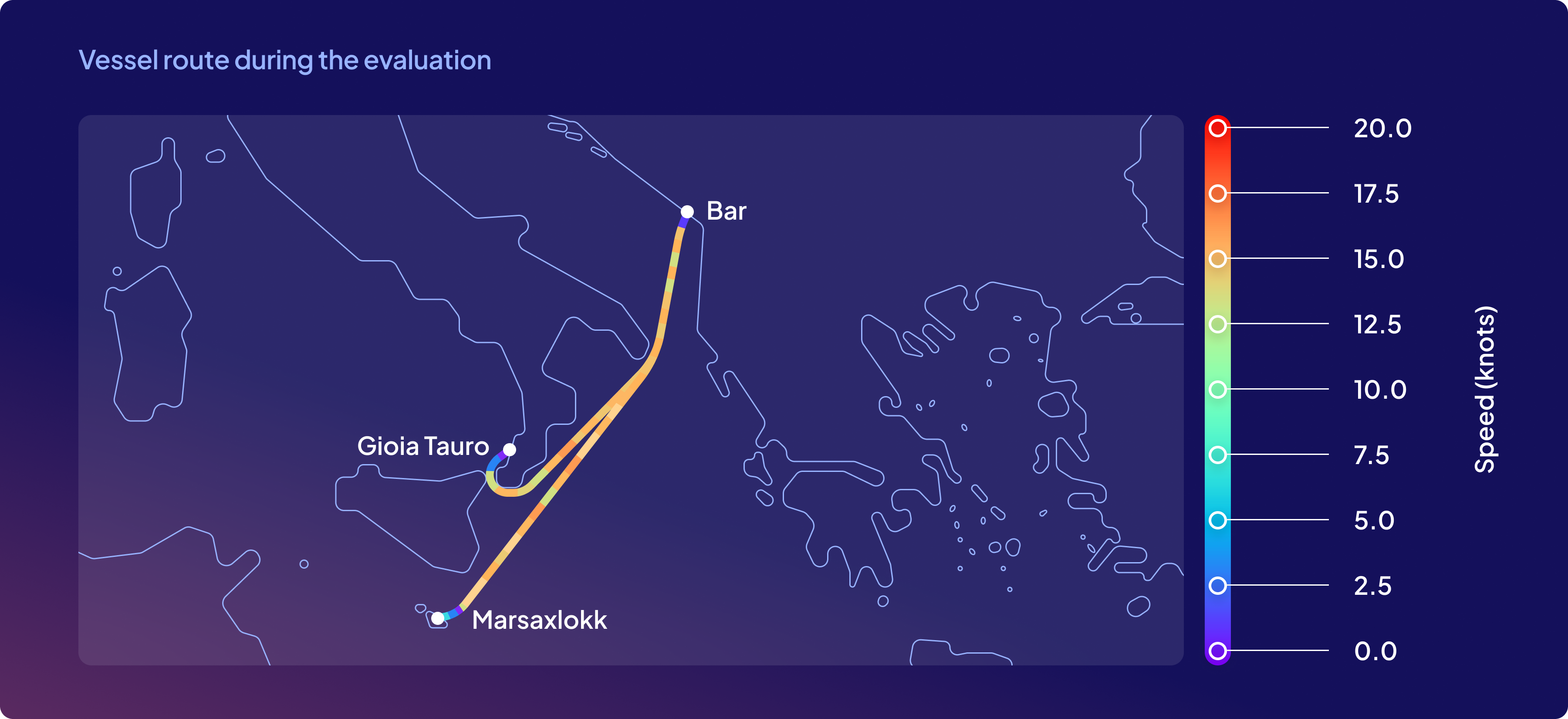
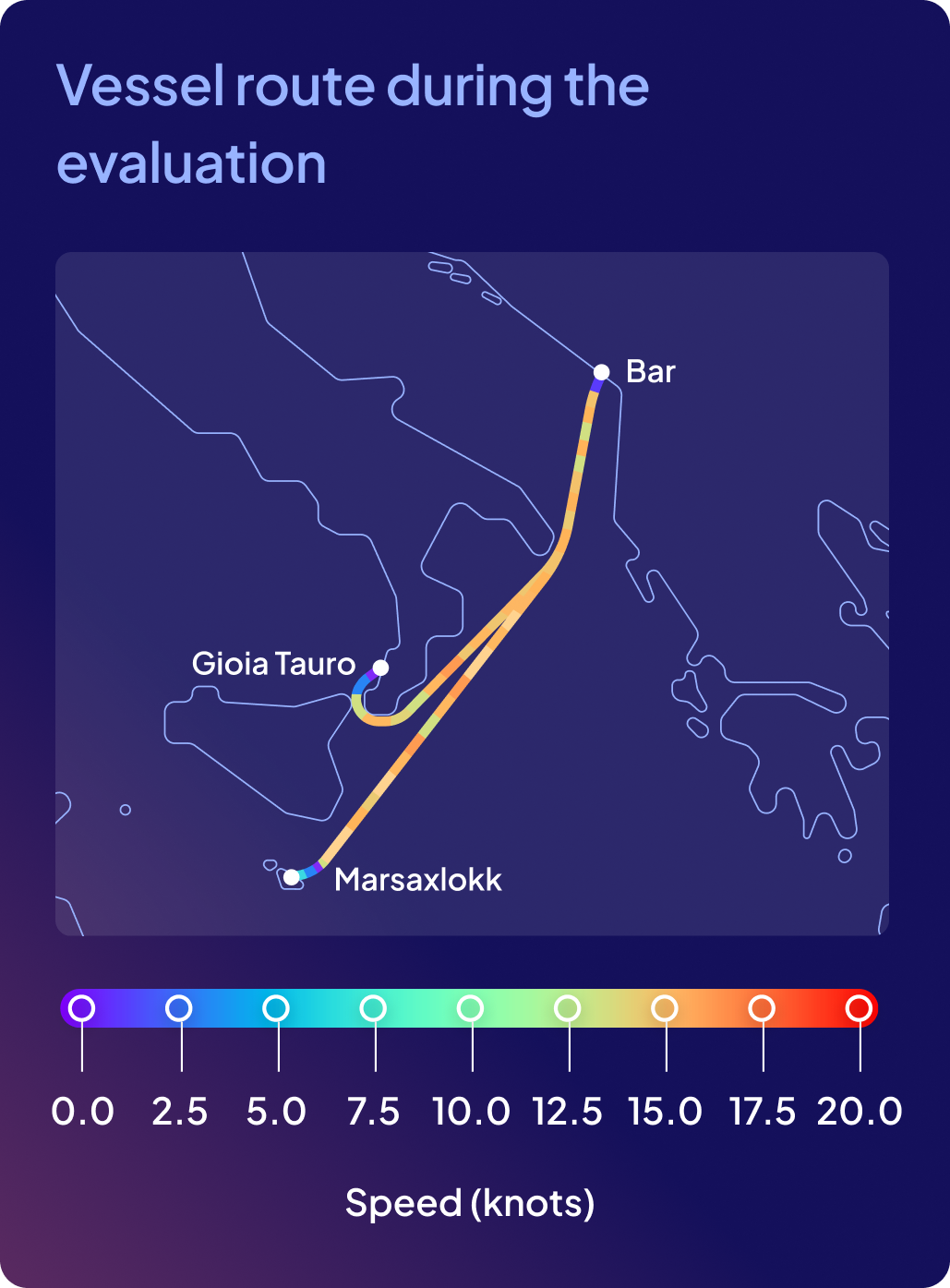
Lloyd's Register ran the trial to find out. Five days, 828 nautical miles from Gioia Tauro to Marsaxlokk, every detection benchmarked against radar, AIS, and direct visual observation. For LR, it's a reference point for how the industry evaluates AI navigation technology, at a moment when decarbonization and autonomy are reshaping what's expected of vessels and the teams running them.

Dor Raviv
Co-founder and CTO
Orca AI
Dipali Kuchekar
Product Manager
(Marine and Offshore)
Lloyd's Register

Key findings

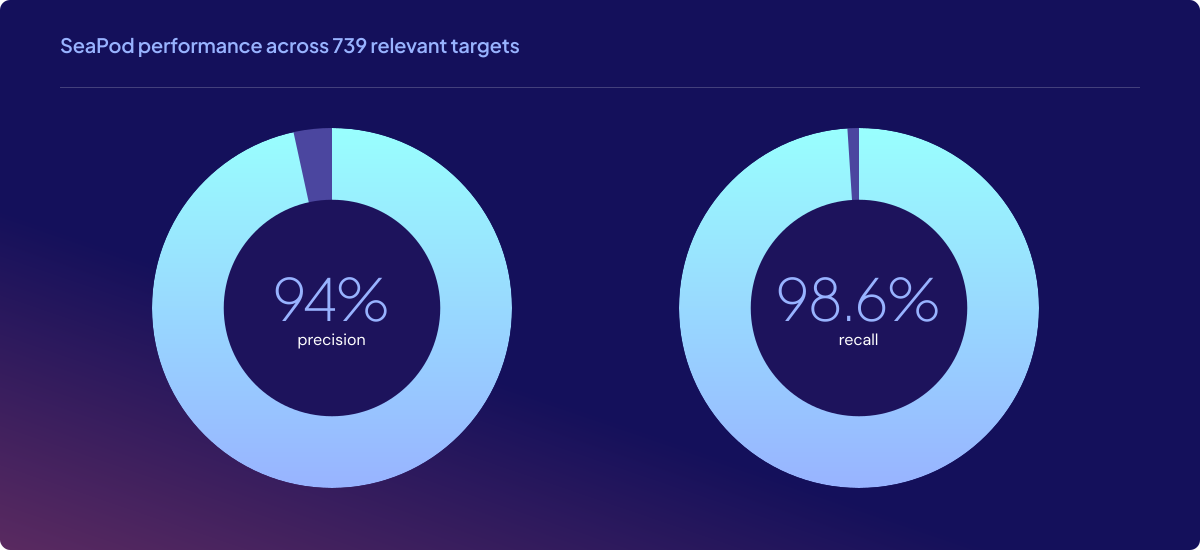
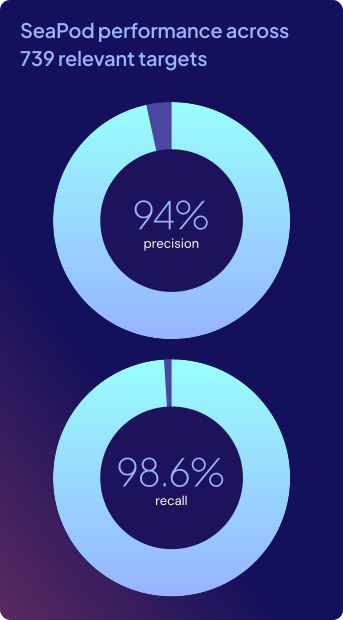
Orca AI's computer vision achieves 94% precision and 98.6% recall

Across 739 relevant targets, Orca AI's digital watchkeeper, the SeaPod, achieved 94% precision and 98.6% recall. Results held across day, night, and congested conditions alike, with a missed detection rate of 1.4%. Zero system downtime was recorded throughout the five-day voyage.

Get independent data on AI's impact in live maritime operations

Key findings

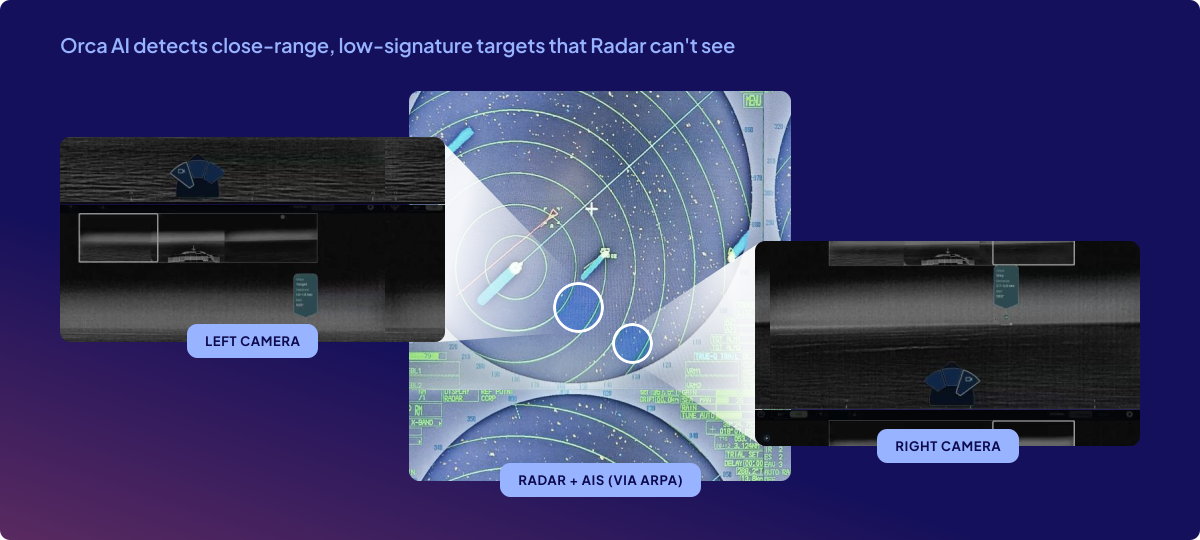
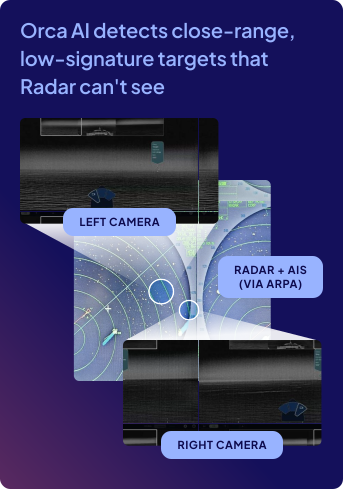
Orca AI detects close-range, low-signature targets that Radar can't see

During the voyage, several close-range targets detected by Orca AI produced no meaningful signature on the vessel's radar, including small craft with low radar cross-sections and vessels obscured by near-clutter.

In one documented case, the Officer of the Watch first learned of a small, unlit wooden boat that had drifted from its mooring at night through the Orca AI thermal detection, using its position data to adjust course and report the contact to local authorities.

Methodology

Tested in the conditions bridge teams actually work in.

Observations were taken every 30 minutes in open sea, reduced to every 5 minutes in congested areas including the Strait of Messina, port approaches, and the Marsaxlokk anchorage. 98 observations in total, covering 739 relevant targets.

At each interval, LR representatives captured recordings of the Orca AI platform alongside ARPA and ECDIS screenshots and direct visual observation, with the officer of the watch contributing to ground truth generation. 63% of observations were under congested conditions, with up to 45 targets tracked simultaneously across day, night, and sunrise/sunset periods.

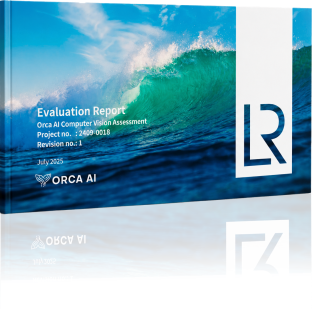
Get the full Lloyd's Register evaluation.