



December 16, 2025

Noemie Ifrah, Marketing & Communications Manager, Orca AI
Share


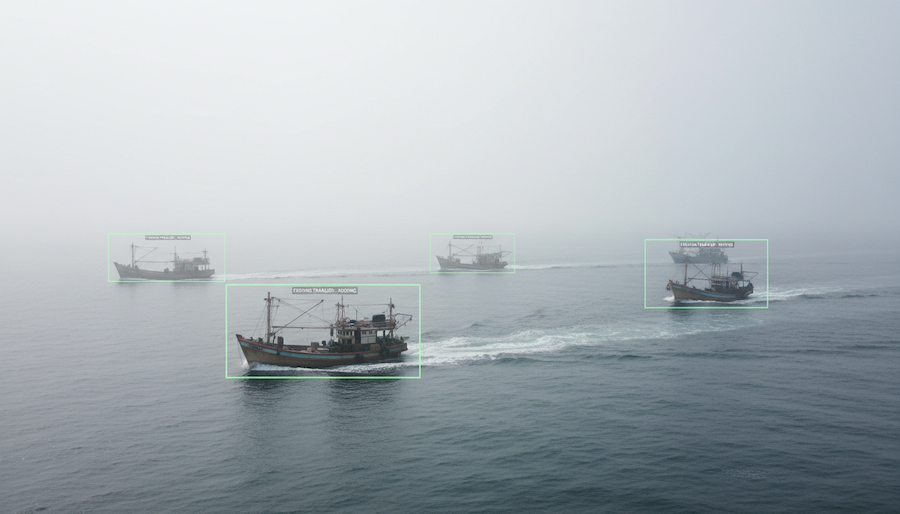
The persistent challenge of fishing vessel collisions
Each year, as China’s seasonal fishing bans lift, tens of thousands of trawlers return to sea, converging with international shipping lanes often under limited visibility and intense congestion. Despite radar and AIS coverage, collisions continue to rise – prompting new China Maritime Safety Administration (MSA) advisories and heightened scrutiny from insurers and flag states.
Fishing vessel collisions remain one of the most predictable yet costly operational risks facing commercial fleets in East Asia. From the Yellow and Bohai Seas to the Taiwan Strait and the South China Sea, dense fishing activity intersects with major trade routes, creating persistent hazards – especially in the weeks following the reopening of fishing grounds.
The statistics are sobering. In 2024, South Korea recorded over 100 fishing vessel fatalities. In April 2024, a collision in Hainan waters between a Panamanian container ship and a fishing vessel left eight crew members missing. In November 2025, a cargo ship struck a fishing vessel east of Weihai, again with eight missing crew members. A month or so earlier, just east of Tianjin Port, another collision sent a fishing vessel to the bottom with 10 crew lost.
These are not isolated events – they are recurring symptoms of a systemic detection gap that traditional navigation systems struggle to close.
Operational blind spots and the cost of inaction
Why traditional systems fall short
The China MSA has identified in 2023 38 high-risk collision areas and later on issued updated 2025 safety advisories emphasizing enhanced watchkeeping. Yet despite these measures, collision frequency remains high.
AIS gaps
According to Global Fishing Watch, up to 75% of the world’s industrial fishing vessels are not publicly tracked via AIS. Many artisanal and semi-industrial fleets in Asian waters operate without transponders – or intentionally switch them off – creating invisible hazards for merchant ships.
Radar limitations
Small fishing boats made from wood or fiberglass generate weak Radar echoes, particularly in fog, heavy rain, or areas with intense Radar clutter. Fishing gear such as buoys and nets remain undetected, compounding the problem.
Environmental factors
The conditions that most demand vigilance are darkness, fog, haze, heavy rain, and glare. They are precisely when traditional sensors perform worst. Radar discrimination becomes unreliable in cluttered coastal waters, while human visual detection declines sharply under limited visibility.
Human factors
Extended watchkeeping periods cause fatigue and slower reaction times. Cognitive overload from monitoring multiple displays, visual strain during night operations, and glare-induced impairment all contribute to delayed recognition of emerging threats. AI-based digital watchkeeping systems like the Orca AI* operational platform directly support the IMO’s fatigue management principles (MSC/Circ.1014) by reducing manual monitoring and sustaining continuous vigilance during long watches.
The financial reality of collisions
The impact of fishing vessel collisions extends far beyond immediate damage.
Direct costs can include:
- Hull and equipment repair
- Fishery compensation claims (which can reach RMB multi-million settlements)
- Crew injury or fatality claims
- Fines or penalties for non-compliance with China MSA advisories
Indirect costs can include:
- Off-hire of merchant vessels during repair and investigation
- Route deviations and scheduling disruptions
- Spare part logistics and dry-dock delays
- Impact on long-term maintenance cycles
Insurance impact
Protection & Indemnity (P&I) clubs increasingly correlate premium increases with low-visibility incidents (collisions with fishing vessels typically occur at night) and inadequate watchkeeping documentation. Operators unable to demonstrate enhanced detection measures risk facing higher renewal rates or restricted coverage. Non-compliance with MSA advisories can further aggravate liability exposure.
Beyond financial losses, collisions also carry reputational and environmental risk, especially in exclusive economic zones (EEZs) under regional or media scrutiny.
Camera-based AI: Closing the detection gap
Camera-based AI situational awareness systems like Orca AI provide an additional detection layer that directly addresses the blind spots of Radar and AIS without replacing them.
Enhanced detection capability
Advanced computer-vision models identify small, low-contrast targets like fishing vessels in conditions that defeat Radar and human sight – darkness, glare, fog, or heavy weather. These systems continuously analyze live video feeds, offering fatigue-resistant vigilance and real-time classification that human watchkeepers cannot sustain for extended periods.
Predictive collision alerts
AI generates real-time predictive tracks and collision risk assessments, providing COLREGs-compliant alerts that give bridge teams more time to act. This supports compliance with COLREGs Rule 5 (“proper lookout by sight and hearing”) by extending situational awareness beyond human limitations.
False alarm reduction
Through sophisticated classification algorithms, AI filters out benign contacts, reducing false positives that contribute to alert fatigue. Watchkeepers can then focus attention on genuine threats instead of noise.
Seamless integration
Modern camera-based systems integrate easily with existing bridge networks via low-bandwidth edge processing. Data is analyzed locally, ensuring real-time performance even without satellite connectivity. The result is a fused situational picture combining Radar, AIS, and optical inputs for comprehensive awareness.
Evidence and compliance
AI systems produce time-stamped visual evidence of watchkeeping activities and detections. This record supports post-incident analysis, insurance claims, and internal training, while demonstrating due diligence under China MSA guidance and flag-state safety expectations.

Implementation and ROI
Deploying AI-powered situational awareness as a bridge decision-support system is practical and operationally aligned.
Retrofit-friendly
Mounts onto existing bridge masts and network architecture.
Low bandwidth
Performs edge inference locally, eliminating dependence on ship-to-shore connectivity.
SMS compatibility
Integrates into existing Safety Management Systems and watchkeeping procedures.
Fatigue management
Automates parts of the lookout function, allowing watchkeepers to maintain alertness during extended operations.
Regulatory alignment
Complies with data governance requirements in Chinese coastal waters and aligns with IMO and MSA safety recommendations.
Measuring ROI
Quantitative metrics
- Reduction in near-miss incidents
- Faster alert-to-action response times
- Lower off-hire days due to fewer collision-related repairs
- Stable or improved insurance premiums
Qualitative Benefits
- Improved night-time vigilance and safety culture
- Reduced cognitive fatigue through automated threat filtering
- Enhanced training through video-based reviews
- Stronger compliance posture for audits and investigations
For operators crossing China MSA’s 38 identified high-risk areas multiple times per year, a single prevented collision can offset the full cost of implementation many times over.
The case for action
Fishing vessel collisions in East Asian waters are not going away. The regional density of fishing traffic, inconsistent AIS visibility, and recurring poor weather will continue to challenge traditional watchkeeping.
What has changed is the availability of AI-based systems capable of addressing these limitations directly. Camera-based situational awareness technology offers commercial fleets a retrofit-ready, regulation-aligned, and fatigue-resistant way to enhance safety and protect both assets and lives.
For fleet operators, the question is no longer whether AI can improve safety – it’s whether the risk of not deploying it can still be justified.
*ORCA AI’s situational awareness and collision avoidance system applies advanced computer vision and machine learning trained specifically for maritime environments to detect small, low-visibility targets that Radar and AIS often miss. Operating in real time, it identifies fishing vessels, buoys, and other obstacles even in dense traffic, glare, or fog; conditions typical of East Asia’s congested coastal waters. The system fuses optical, Radar, and AIS data into a unified visual display that enhances bridge decision-making and compliance with COLREGs. At the fleet level, ORCA AI enables shore-based teams to monitor near-miss trends, analyze route safety, and quantify the impact of operational improvements. The result is fewer incidents, lower crew fatigue, and measurable gains in navigational safety and compliance with regional MSA advisories.
Frequently Asked Questions
- How does camera-based AI detect fishing vessels that radar misses?
Camera-based AI systems use computer vision algorithms trained to identify small, low-contrast objects in visual and thermal imagery. Unlike radar, which relies on reflected radio waves that can be weak from wooden or fiberglass hulls, cameras process actual visual data including vessel shapes, wake patterns, and heat signatures. AI can detect these targets even in fog, darkness, or glare conditions where traditional sensors struggle, making them particularly effective for spotting non-AIS fishing vessels and unmarked fishing gear.
- What percentage of fishing vessels actually use AIS transponders?
Research from Global Fishing Watch indicates that up to 75% of global industrial fishing vessels remain untracked by public AIS systems. While only about 2% of the world’s approximately 2.9 million fishing vessels carry AIS, this gap is even larger in Asian coastal waters where artisanal and semi-industrial fleets frequently operate with transponders switched off or absent entirely, creating significant blind spots for collision avoidance systems.
- Can AI systems work without internet connectivity at sea?
Yes. Modern maritime AI systems use edge computing, which means all processing happens locally on the vessel using onboard hardware. This eliminates dependency on satellite internet or ship-to-shore connectivity, ensuring real-time detection and alerts even in remote waters or during connectivity outages. The systems integrate with existing bridge networks and require only low bandwidth for any optional remote monitoring features.
- How does AI reduce false alarms compared to traditional radar?
AI-powered vision systems apply sophisticated classification algorithms that distinguish between genuine collision threats and benign radar contacts. By analyzing multiple visual characteristics (shape, size, movement patterns, heat signature), the system can differentiate between a drifting buoy, a small fishing vessel, and radar clutter from weather. This contextual understanding significantly reduces false alarms that contribute to alert fatigue, allowing bridge teams to focus attention on actual risks.
- Does deploying AI collision avoidance help with insurance and regulatory compliance?
Absolutely. AI systems create timestamped visual records of watchkeeping activities, threat detection, and crew responses, providing documentary evidence of due diligence for insurance claims and regulatory investigations. This is particularly valuable for demonstrating compliance with China MSA advisories and COLREGs requirements. P&I insurers increasingly view these systems favorably as they demonstrate proactive risk management, potentially stabilizing or reducing premiums for operators in high-risk zones.


