November 12, 2025

Yael Lubratzki Kurman, VP Product
Share


For years, bridge teams have wrestled with a critical problem: information overload. Officers are tasked with monitoring multiple, disparate systems during their shift, from radar and ECDIS to compliance checklists. They are often forced to rely on forecasts or static reports that fail to reflect the fast-evolving, real conditions at sea.
Through close work with captains, fleet managers, and bridge officers, we gathered hands-on feedback that confirmed a consistent message: officers face increasing complexity on the bridge, coupled with limited real-time visibility into risks. Ultimately, this leads to too much fragmented information coming from too many different systems, making fast decision-making harder.
That challenge is exactly why we built Co-Captain.
Co-Captain: collaborative navigation powered by trustworthy real-time data
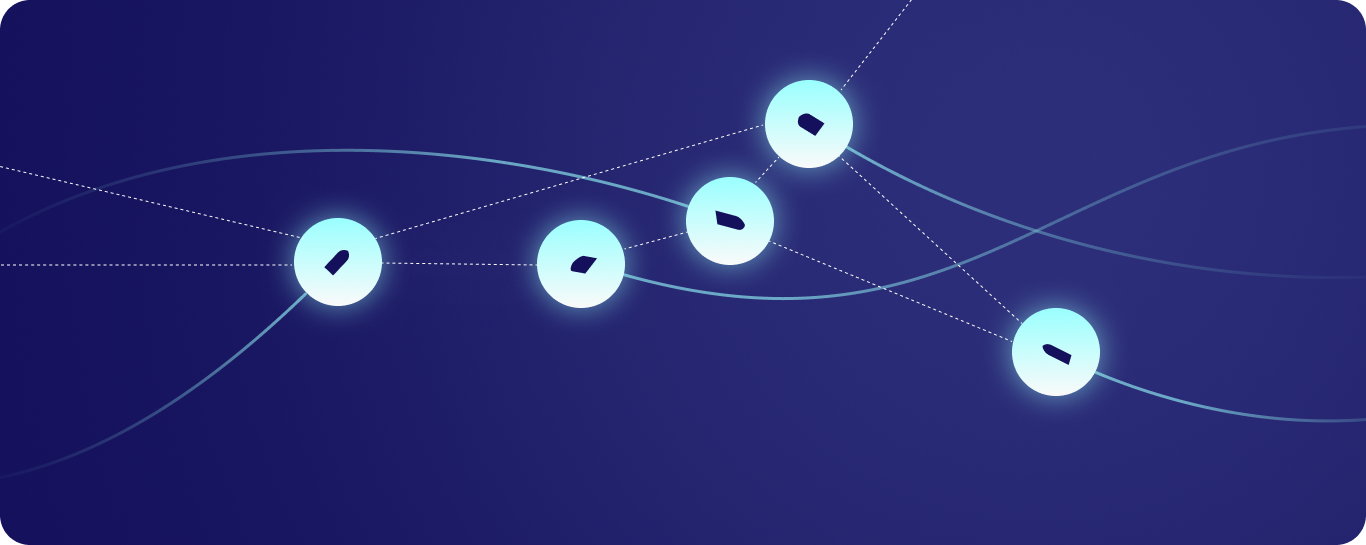
Co-Captain is a cutting-edge decision support system built to transform how vessels perceive and respond to real-time events and risks while navigating at sea. It is fueled by a global maritime intelligence network where every Orca AI equipped ship contributes data to create a shared, real-time awareness of conditions across the oceans. We are turning fragmented data into clear, actionable awareness through collaborative navigation.
The technical backbone is robust. Each Orca AI equipped vessel automatically becomes a node, uploading data to the cloud even with limited connectivity. Co-Captain operates on the most resilient ship-to-ship intelligence network in the industry, consolidating data from more than 1,000 AI-equipped vessels worldwide. This density is key: we waited until we had enough to launch Co-Captain, ensuring the network is powerful and effective. Once the data reaches the cloud, it is anonymized, stored, processed, and aggregated in real time. Our system validates this information and enriches it with our historical database and other external sources, such as the NOAA weather systems, to create a complete picture of what is happening at sea.
The system continuously monitors data patterns across all connected vessels, applying defined thresholds to determine whether a new event should be triggered. A smart matchmaking engine then connects this global event database with the ship’s specific route, ensuring the vessel receives only the relevant alerts for the ship characteristics, its upcoming journey, minimizing unnecessary distractions and keeping the crew focused on what truly matters on their route.
Mitigating false positives for crew reliance
For fleet managers, the reliability of a safety tool is paramount; false positives erode crew trust. Co-Captain does not trigger alerts after just one single reading. We built a technical method of continuous data verification, meaning the system must wait to see a consistent pattern over multiple readings and multiple ships before triggering the alert. This process filters out noise or data spikes. We also use external sources to compare and verify the information for specific events.
Once verified, the alerts are fast: the average time between the alert creation and the notification activation for ships across the world is approximately 1 minute.
Co-Captain delivers two main types of alerts that enhance compliance and safety:
- Ship-to-ship alerts: These combine live reports shared between Orca AI vessels and automatic detections from the onboard sensors (such as severe weather conditions, sudden GPS loss, or unusual high traffic). Each event is verified through multiple layers before being shared across the network so other ships can prepare in advance and with confidence.
- Geo-based alerts: These notify crews as they approach defined regions such as an emission control area, piracy zones, or whale protected areas, ensuring compliance and safety before the vessel crosses the boundary.
Data confidentiality: protecting proprietary fleet information
Trust in the network is built not only on the accuracy of the alerts but also on the confidentiality of the shared information. For fleet owners, protecting proprietary operational data is paramount. We want to assure our partners that the data fueling Co-Captain is completely anonymized.
Technically, the data we share is linked only to the GPS location of the event, it is not based on ship location or ID. This means that if someone were to gain access to the data, they would only know what area is experiencing an issue, not which specific vessel reported it. This design choice is fundamental to relieving any stress around data sharing. Furthermore, we adhere to the best cyber security standards, utilizing secure cloud technology and private keys, and following guidelines from classification societies and relevant regulations to secure our platform.
Protecting assets and controlling costs
We built Co-Captain to directly address the scenarios that pose the biggest financial and safety risks.
Consider the serious operational risk of GPS Spoofing. Only months ago, the collision between the Front Eagle and the Adeline near the Strait of Hormuz shocked the industry, demonstrating the severe consequences when critical navigation systems are compromised. When our system detects GPS interference (jamming or spoofing), it recognizes the issue and triggers an alert. Crucially, the system instantly filters out the unreliable GPS data and switches to visual mode, utilizing computer vision and AI perception to constantly detect, track, and classify objects in real time. This allows the system to estimate bearing and distance, deriving the risk of collision.
Simultaneously, the affected vessel becomes a reporting node, immediately sending a GPS interference notification to other Orca AI vessels nearby or on the same route. This provides clear instructions, such as increasing bridge manning or switching to coastal navigation methods using the radar, preserving asset integrity despite external interference.

Another vital application is severe weather, which directly impacts profitability. Extreme weather isn’t just a safety issue; it impacts fuel consumption and operational costs.
When sailing at 12 knots in fair weather, fuel costs are about $70 per nautical mile; once the wave heights rise above 2 meters, that number climbs to nearly $90 per mile. The vessel burns more fuel to maintain speed when it starts to pitch and roll. This inefficiency can lead to a documented increase in fuel use of 18%, potentially adding nearly $1 million per year in extra fuel costs and resulting in over 5,000 tons of CO2 emissions.
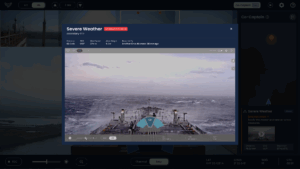
When a vessel experiences high waves and heavy weather, that real-time information is immediately shared across the Co-Captain network with other ships on the same route. Crews receive alerts with live sea conditions, including wind speed, direction, and expected pitch and roll. Uniquely, a short video clip is attached, showing the actual sea state and visibility conditions right now, not just a forecast. This early notification allows crews valuable time to reduce speed, change course, or perform extra lashing before the storm hits, maximizing efficiency and protecting the cargo.
Strategic autonomy and future-proofing investment
Co-Captain is a huge milestone built towards achieving greater autonomy and automation for ships. Fleet owners must ensure their technology investments today pave the way for future operational models.
We view the evolution towards autonomous capabilities as a process, not a “zero to one” instant deployment. We are building these capabilities over time, step by step, similar to how autonomous driving systems evolved. Autonomous capabilities can be divided into two main parts, and Co-Captain is a crucial step towards automating the first: strategic navigation. In this future state, the system will receive real-time data from the cloud, from other ships, and from the port of destination, enabling it to calculate and optimize the voyage towards its destination. While the human remains in the loop to supervise operations today, the ultimate vision is to eventually automate this strategic calculation and decision-making process.
For this vision to materialize, the data sharing framework provided by Co-Captain is fundamental. The network effect is critical: with more than 1,000 ships deployed and over 1,500 vessels contracted, our continuous growth ensures that the network gains higher density, becoming even more powerful and effective as more data is shared and verified. By connecting vessels and optimizing every voyage in real-time, Co-Captain is currently enhancing navigation and simultaneously designing the way for the next era of autonomous shipping.