August 21, 2025

Anton Yurkov, AI Team Lead, Orca AI
Share


The Russian shadow fleet now represents one of the most urgent maritime security and environmental risks of this decade. By mid-2025, more than 400 oil tankers are estimated to be operating under opaque ownership and without Western insurance, carrying up to 60 percent of Russia’s seaborne crude exports while systematically circumventing G7 and EU sanctions. This unregulated network thrives on regulatory loopholes, deceptive shipping tactics, and fragmented global enforcement.
As the fleet continues to grow, the effectiveness of international sanctions is eroded, and the risk of major oil spills, vessel collisions, and environmental harm rises. With tankers evading oversight at an unprecedented scale, every voyage heightens the danger for crews, threatens the resilience of coastal communities, and puts the health of European marine ecosystems at greater risk. For innovation and risk executives, confronting the dark fleet is now fundamental to advancing maritime safety, regulatory compliance, and sustainability goals.
Evasion at scale and the dark fleet’s risk portfolio
The Russian shadow fleet’s evasion playbook is technically sophisticated and operationally diverse. To circumvent G7 and EU enforcement, operators deploy a range of deceptive practices designed to obscure vessel ownership, cargo origin, and true location.
-
Deceptive shipping practices
Vessels manipulate Automatic Identification System (AIS) signals by broadcasting false identity codes, spoofing their location, or going dark by switching off transponders altogether. Some falsify International Maritime Organization (IMO) numbers or swap them mid-voyage, a direct violation of maritime law, making real-time digital tracking unreliable.
-
Opaque ownership structures
Vessel ownership is routinely layered through multiple offshore shell companies, often registered in secrecy jurisdictions like Dubai. Names and flags change frequently via rapid transactions, obscuring beneficial owners and complicating sanctions enforcement.
-
Ship-to-ship transfers in international waters
A core tactic is transferring oil cargo between ships in international waters, far from port oversight, to mask Russian crude’s origin. These operations often occur in high-risk areas such as the Baltic and Black Seas and are typically declared late or not at all, limiting regulatory intervention.
-
Avoidance of Western insurance and certification
Most of the shadow fleet operates without credible Western insurance or classification, relying instead on fringe providers or sailing uninsured. This not only reduces oversight but exposes coastal states to significant financial and environmental liabilities in the event of an incident.
-
Rapid resale and reflagging
Since early 2022, over 230 tankers have changed hands, names, and flags, often via indirect sales, before reappearing as Russian oil carriers. This leverages regulatory blind spots, as indirect sales through third-country shell companies remain legal even as direct transfers to sanctioned entities are prohibited.
-
Exploiting electronic navigation and regulatory loopholes
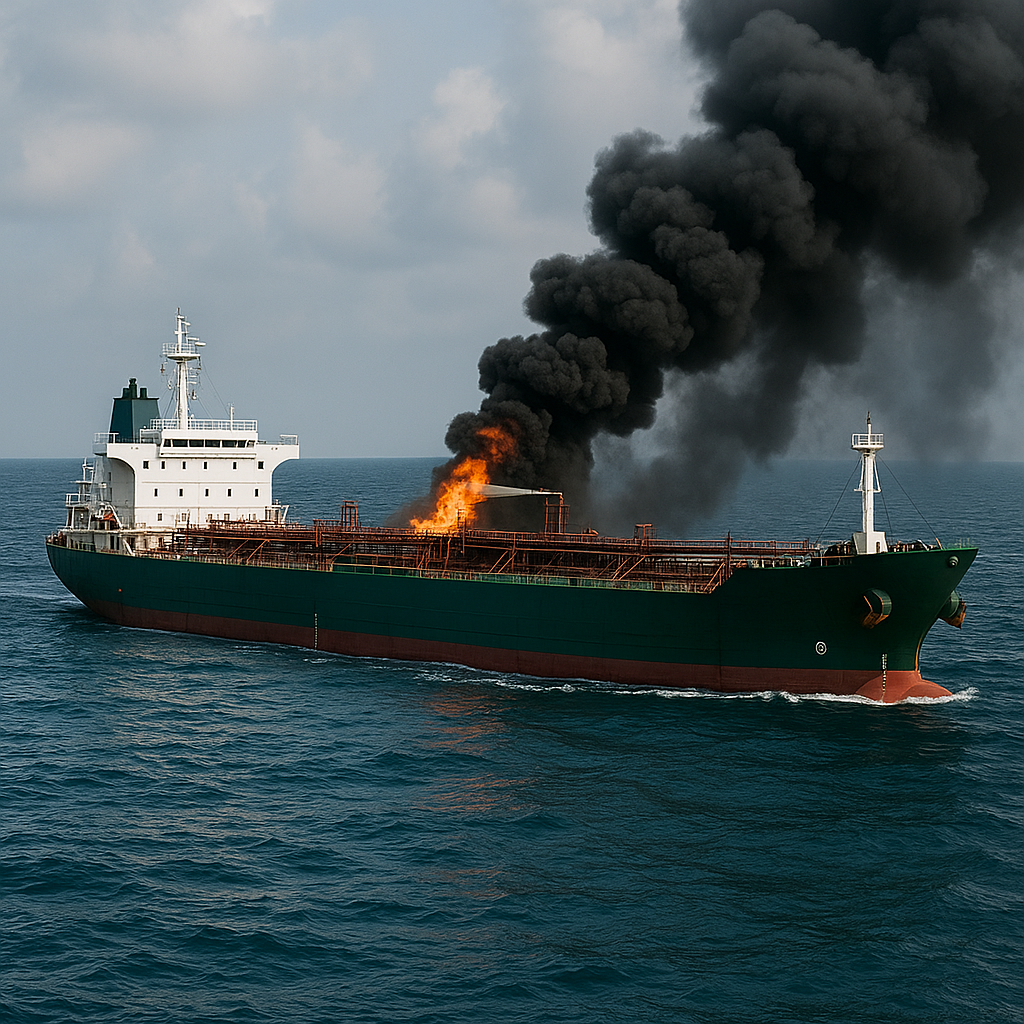
The fleet exploits GPS jamming and location spoofing, particularly in contested regions such as the Baltic and Black Seas, to defeat surveillance and enforcement. This has been linked to several navigation accidents and near-misses involving shadow vessels, such as the 2025 collision in the Strait of Hormuz where a “dark” tanker operating without AIS was involved in a fire and crew evacuation. Similar electronic deception tactics were reported in the Black Sea in late 2024, where ships’ positions on navigation screens were spoofed to false coordinates, causing dangerous confusion for both commercial and military vessels.
These evolving tactics enable the shadow fleet to persistently outmaneuver Western enforcement. The fleet’s web of deception, regulatory arbitrage, and digital manipulation represents an unprecedented challenge for European maritime domain awareness and sanctions compliance.
Enforcement, technology, and the limits of traditional detection
Sanctions and port access bans have removed dozens of shadow tankers from key trades, and Europe now mandates real-time notification and inspections for ship-to-ship transfers. In July 2025, the UK sanctioned 135 shadow fleet tankers and two associated companies, directly targeting Russia’s maritime capacity and energy revenues. Shortly after, the EU and UK jointly lowered the Russian oil price cap from $60 to $47.60 per barrel and expanded sanctions to 447 vessels, including 105 new additions, in an effort to restrict sanction-evasion trade routes. In the United States, President Donald Trump signaled that similar sanctions could be introduced if Russia does not agree to a ceasefire in Ukraine, marking the potential for greater transatlantic alignment against the shadow fleet.
Yet, shadow fleet operators adapt quickly, moving registration to more permissive jurisdictions, exploiting legal gray areas, and deploying increasingly sophisticated digital deception tools. Traditional vessel tracking, dependent on AIS, radar, and GPS, has been outpaced by the fleet’s manipulation of electronic signatures. With spoofing and AIS darkening now standard tactics, European enforcement increasingly relies on new-generation technological solutions.
Digital watchkeepers and AI supporting the detection of shadow fleet vessels
For the industry, innovation in digital detection is about much more than compliance. Early identification of “dark” and high-risk tankers is critical to preventing accidents, reducing the risk of major environmental incidents, and supporting international efforts for more sustainable oceans.
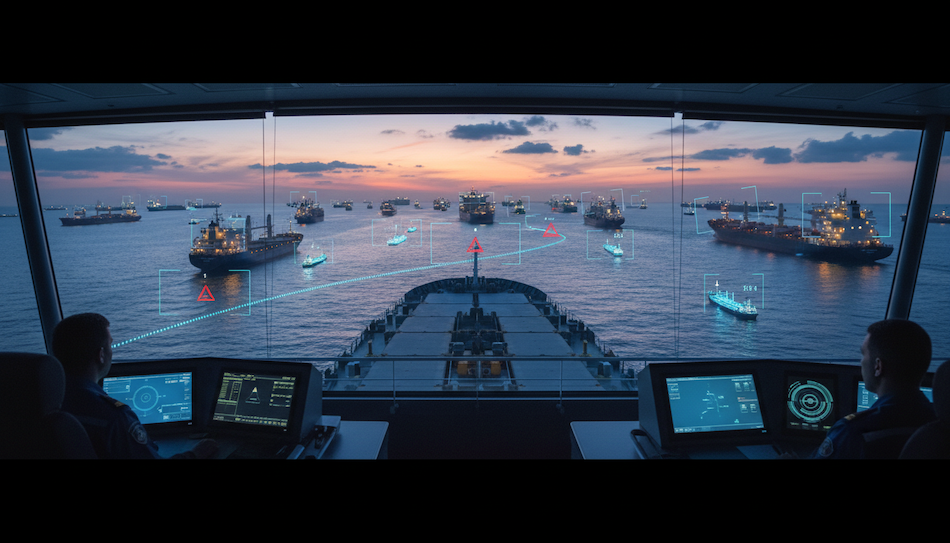
Solutions such as Orca AI’s digital watchkeeper platforms can help enhance detection of shadow fleet vessels by leveraging computer vision, machine learning, and sensor fusion to improve situational awareness where traditional systems may fall short. When shadow fleet vessels spoof AIS, jam GPS, or go dark, the digital watchkeeper’s multi-camera array and real-time video analytics provide an important second layer of detection. The system can visually identify and track physical vessels, buoys, tankers, and small craft even when radar signals are degraded or electronic data is deliberately falsified. In environments where radar is unreliable, the AI-powered visual system can help confirm the presence, bearing, and motion of nearby ships, thus supporting situational awareness despite vulnerabilities exploited by the shadow fleet.
For European operators and regulators, these capabilities can provide tangible advantages
- Visual confirmation of “dark” vessels: Can enable detection of tankers that disable transponders or spoof location, complementing traditional AIS and radar-dependent tracking.
- Spoofing resilience: Helps crews and authorities trust what they see in challenging electronic environments, even under GPS denial or electronic warfare conditions.
- Anomaly detection and risk scoring: AI algorithms can flag behavioral anomalies such as loitering near critical infrastructure or suspicious course changes to enhance hybrid threat detection.
- Audit trails for enforcement: Visual and behavioral records can support inspection, interdiction, and compliance verification during port calls and chokepoint crossings.
With global commercial fleets reporting reductions in close encounters and measurable safety improvements after deploying digital watchkeepers, these technologies can help European stakeholders enhance their ability to detect shadow fleet activity, supporting broader maritime security and compliance efforts.
Conclusion: Confronting the shadow fleet challenge
The shadow fleet is a stark reminder that weak links in the enforcement chain can erase years of progress on maritime safety and sustainability. Its unchecked growth has raised the stakes for Europe, exposing seas, communities, and economies to the risks of collisions, oil spills, and regulatory erosion. As new tools emerge to address these gaps, maritime leaders have both an opportunity and a responsibility to prioritize solutions that safeguard commerce, compliance, and the environment. Orca AI’s mission to enhance navigational safety and reduce environmental impact aligns directly with this responsibility, offering a practical and scalable way to help detect and deter shadow fleet activity.
Three priorities define the path forward:
-
Scale and risk: More than 400 shadow tankers now move 60 percent of Russia’s seaborne crude, many of them uninsured and aging, increasing the likelihood of collisions and spills.
-
Evasion and enforcement: Operators exploit AIS manipulation, GPS spoofing, and opaque ownership structures, while the UK, EU, and potentially the US expand sanctions to curb these tactics.
-
Technology and resilience: Traditional tracking has reached its limits; AI-enabled digital watchkeepers deliver the detection, spoofing resilience, and audit trails required to strengthen enforcement and protect the environment.
Confronting the shadow fleet demands a dual approach: stronger international sanctions and smarter technological adoption. The leaders who act now to reinforce safety and sustainability will also secure compliance, resilience, and long-term trust in Europe’s maritime domain.