December 10, 2025

Noemie Ifrah, Marketing & Communications Manager, Orca AI
Share


Executive summary: Proven Scope versus Contingent Future
The essential question facing maritime leaders today is not if to digitalise, but where to invest capital now to maximise fuel efficiency, meet regulatory deadlines and minimise operational risk. This article provides a critical dual-trajectory roadmap that helps the reader prioritise immediate, high-ROI investments (the Proven Reality) while assessing the long-term capital risks associated with full autonomy (the Contingent Future). The analysis focuses on the technical and regulatory convergence between autonomous commercial ships (Maritime Autonomous Surface Ships, MASS) and smart ports, integrating vessel operations (such as AI-powered voyage planning and Just-in-Time arrival) directly with shoreside systems (customs clearance, cargo handling and port logistics), driven by twin mandates of efficiency and regulatory compliance.
This assessment finds that while significant technological components are achieving Proven commercial maturity, the overarching international legal framework required for widespread, high-level automation (Level 3 and 4) remains contingent.
The Proven Scope (current reality): Immediate, quantifiable returns are being realised through operational improvements at MASS Levels 1 (Decision Support) and Level 2 (Partial Autonomy). AI-powered voyage planning and real-time optimisation tools, as well as port agency hub solutions, are the foremost drivers, enabling immediate operational efficiency gains (e.g., fuel savings and schedule accuracy) by optimising routes to synchronise with port readiness. Operational innovations such as the Orca AI operational platform are essential additional components, leveraging computer vision to provide 24/7 situational awareness and serve as the foundational data source for future autonomous navigation. Moreover, Orca AI’s Co-Captain module is already connecting vessels to share live situational data on port approaches and congestion, marking a key step toward the future data-driven ecosystem. Delivering documented, near-term reductions in collision risk also serves to reduce operational costs and insurance exposure. At the same time, compliance demands are driving infrastructure change: for example, the EU Single Window Environment for Customs (Regulation 2022/2039) dictates digital interoperability by 2025 while standardised Electronic Bills of Lading (eBL) protocols are transitioning from aspirational concepts to mandated commercial realities.
The Contingent Scope (future ambition): Full, uncrewed autonomy (MASS Level 4) faces fundamental strategic constraints rooted in the slow pace of international law. The IMO’s roadmap for a comprehensive, mandatory regulatory instrument – the MASS Code – will not enter into force until approximately 2032. The lack of globally standardised rules for crew liability, remote control operations and fault assignment prevents the commercial deployment of truly unmanned vessels, thus stalling the final stage of ship-to-port integration and the realisation of the full ecosystem’s potential. Core legal challenges – specifically liability assignment (shifting fault from the human Master to software vendors), defining the legal standing of a remote operator and updating the STCW Code for Remote Operations Centre (ROC) crews – remain largely unresolved, placing significant strategic risk on premature high-level autonomy investments.
Part I: The autonomous operational core and enhanced efficiency
Refining the ship-port data ecosystem: The foundation of integration
The foundational element of the smart maritime system is the continuous, real-time data transfer that connects vessel operations (from ETA and collision avoidance to cargo handling and undocking) with port systems. This requires highly advanced connectivity, including maritime 5G, edge computing and satellite broadband to ensure the low-latency, high-bandwidth data necessary for real-time AI control and monitoring. This robust digital connectivity transforms global shipping from a series of isolated interactions into a predictive network.
Real-time data synergy: The foundation for Just-in-Time (JIT) arrivals
In the future, autonomous ships will be designed to transmit high-fidelity kinematic data, including real-time position, speed, heading and AI-optimised route information to port systems via standardised communication frameworks such as E-Navigation and AIS over digital networks. In return, ports will utilise predictive models to instantaneously respond with live berth availability, critical tide and draft data and current traffic density.
This continuous, synchronised two-way exchange will be the enabling factor for Just-in-Time (JIT) arrivals. Vessels will dynamically adjust their speed throughout the voyage to synchronise their arrival precisely with berth readiness (barring unforeseen events or bad weather), effectively eliminating the need for extensive anchorage waiting time and resulting demurrage penalties. AI-powered voyage planning is central to achieving this, leveraging machine learning to analyse weather and current data to maintain optimal speed and ensure scheduling accuracy. The operational impact will be significant, leading to a substantial reduction in fuel consumption and commensurate CO₂ emissions.
The implementation of JIT, while fundamentally an operational efficiency tool, is increasingly accelerated by regulatory necessity. Global regulators, particularly in the EU, have introduced aggressive environmental mandates, notably the inclusion of shipping in the EU Emissions Trading System (ETS) since January 2024. The ETS sets an absolute limit on greenhouse gas emissions and requires the purchase of allowances for compliance. Therefore, JIT arrival is no longer merely a mechanism for cost reduction; it serves as a critical compliance strategy to mitigate carbon penalties and ensure sustainability reporting requirements are met. Hence, environmental regulation can act as a powerful accelerant for requiring autonomous ship-port data synchronisation.
Operationalising safety: Computer vision and AI for watchkeeping
Advanced autonomous capabilities currently reside overwhelmingly at the lower end of the autonomy spectrum (Levels 1 and 2), focusing on enhancing human decision-making and mitigating human error, which is widely acknowledged as the causal factor in most marine incidents. While voyage planning optimises efficiency, navigational support systems like Orca AI address the critical safety gap, representing the commercially viable reality of this transition.
>> Sensor fusion and computer vision for collision avoidance in congested zones
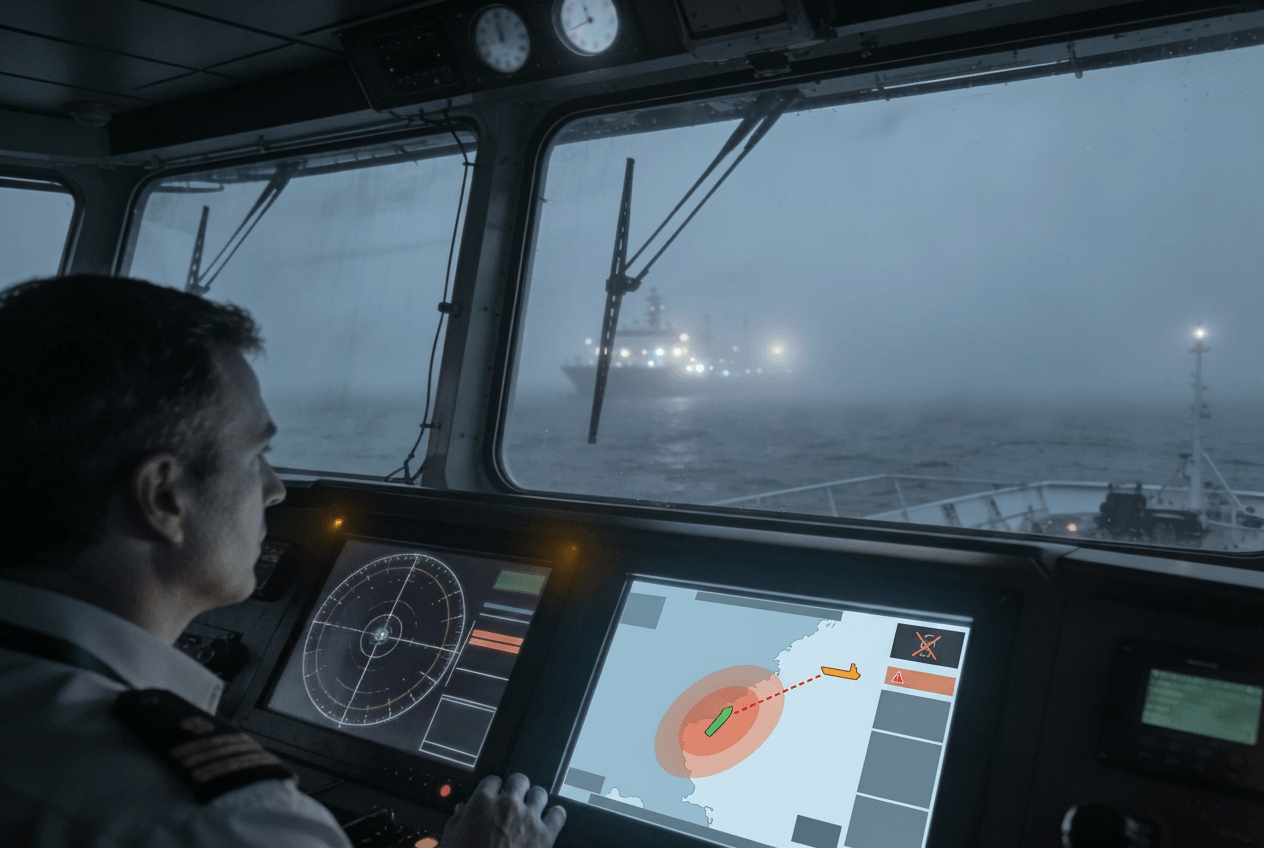
Orca AI acts as an advanced, fully automated watchkeeper, processing multiple sources of information in real time. The technology utilises advanced computer vision, deep learning algorithms and sensor fusion (Radar, LiDAR, AIS, optical/thermal cameras) to detect, track and classify maritime objects, especially in limited visibility conditions such, fog, glare or darkness.
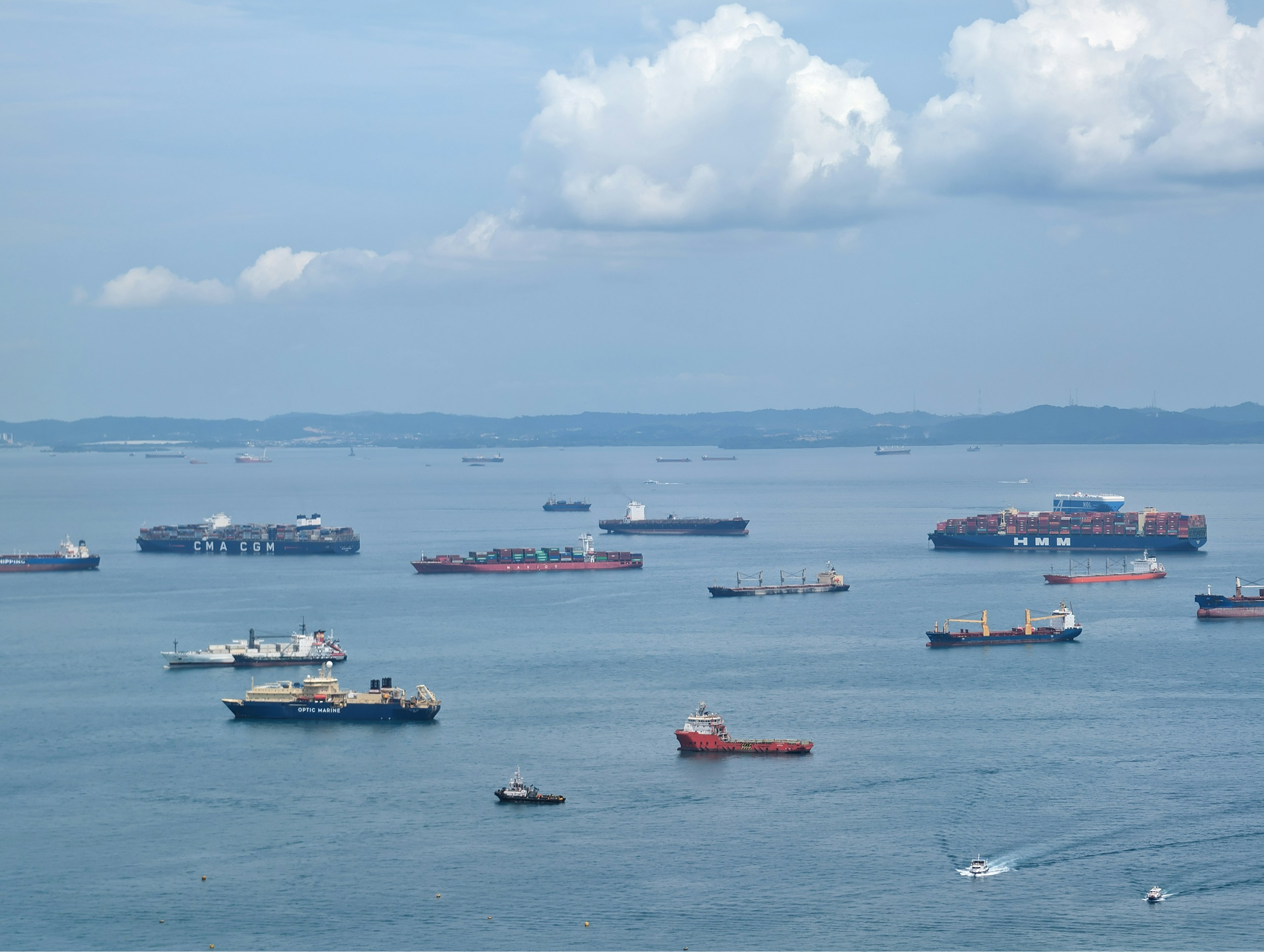
The system’s greatest impact on port operations is its ability to reduce collision risk and enhance predictability in congested approach and departure zones by providing continuous situational awareness to bridge crews, especially in high-risk scenarios. Crucially, this foundational capability provides the essential real-time object detection and classification data required to power future AI-powered autonomous navigation systems (Level 4) within port waters.
>> Ship-to-ship data sharing (Co-Captain), remote operations and VTS Integration
Orca AI’s Co-Captain module represents an immediate, commercially deployed step toward the integrated data ecosystem. This function enables vessels within the network to share real-time, verified alerts regarding high traffic congestion, navigational hazards and severe weather detected during port approaches. This live “crowdsourced” data optimises individual vessel navigation, allowing crews to anticipate issues earlier and make crucial speed or course adjustments before in the final port approaches port.
For operations progressing up the autonomy spectrum, the Orca AI platform facilitates seamless ship-to-shore data streaming via the FleetView dashboard, which delivers live video, navigation sensor data and alarms to shore-based teams.
Vessel Traffic Services (VTS) are central to managing ship-port traffic, and their role is rapidly adapting to include digital integration for MASS. Future VTS systems must be able to monitor and manage mixed traffic (manned and autonomous vessels) through enhanced capabilities like assisting with pre-voyage planning, predicting developing traffic situations and proactively managing ship movements. This immediate ship-to-shore connectivity (via platforms like Orca AI) is essential for the supervision and potential intervention by personnel in a Remote Operations Centre (ROC) or VTS when the vessel is arriving or departing port (Level 2 autonomy), ensuring safe navigation during port approach and movement.
From an insurance perspective, immediate reduction in collision frequency and near-miss incidents, demonstrably achieved through consistent AI-based situational awareness, changes the objective risk profile of insured vessels. P&I clubs and marine insurers are actively monitoring these technical results, recognising that the deployment of proven navigational AI shifts the probability of catastrophic human error-related incidents. The adoption of such proven safety technology is thus poised to become a critical factor in underwriting assessments, potentially leading to preferential premium structures for operators who embrace AI-driven risk mitigation.
Automated cargo flow and optimisation
Data integration has the potential to drive efficiency in the offloading process by connecting digital cargo manifests, stability data and cargo hold sensors directly with automated port assets such as (in container terminals) gantry cranes, Automated Guided Vehicles (AGVs) and yard management systems. This real-time coordination allows ports to plan and execute automated offloading sequences immediately upon the vessel’s berthing, synchronising the movement of specialised equipment and facilitating rapid customs clearance processes.
The primary operational benefit will be improved port throughput, resulting in markedly faster turnaround times by minimising crane idle time and manual labour requirements. Ports can further enhance this efficiency through the deployment of digital twins, which simulate vessel approach, mooring dynamics and resource allocation in a virtual environment, enabling proactive decision-making and predictive maintenance for critical infrastructure.
Quantifiable ROI from advanced data integration
The strategic integration of autonomous operational systems and smart port logistics will deliver clear economic advantages. The overall shift to data-integrated operations is anticipated to yield 8%-12% yearly operational savings per vessel through reduced fuel consumption, minimised maintenance costs and lower downtime.
The return on investment (ROI) materialises across three timelines:
- Short-term ROI: Immediate savings derived from reduced fuel consumption via JIT arrivals (up to 10% efficiency) and lower berth costs.
- Mid-term ROI: Benefits stemming from fewer incidents and insurance claims, directly supported by AI safety systems like Orca AI.
- Long-term ROI: Achieved through fleet-wide efficiency improvements, proactive predictive maintenance, compliance cost reductions related to environmental tracking and competitive differentiation.
Part II: The digital infrastructure mandate: Trade facilitation and seamless clearance
The rise of paperless trade: Electronic Bills of Lading (eBL)
The digitalisation of commercial documentation is a Mandated trend, shifting the industry away from paper-based transactions that are susceptible to fraud and delay.
>> Global standards and efficiency gains
The necessity for paperless trade is underscored by industry standards developed by bodies such as the Digital Container Shipping Association (DCSA). The DCSA B/L standard uses open-source APIs to enable straight-through processing of B/L data, thereby eliminating manual intervention and paper usage.
The commercial rationale for this transition is overwhelming. A study by McKinsey estimated that achieving 100% adoption of the eBL could unlock approximately USD 18bn in direct gains for the trade ecosystem through faster document handling and reduced human error, alongside enabling USD 30-40bn in new global trade volumes by reducing trade friction.
>> Legal readiness, cybersecurity and adoption timeline
Legal frameworks are progressing rapidly, with many jurisdictions adopting laws to recognise the legality of electronic trade documents. Major container carriers have publicly committed to achieving full eBL digitalisation by 2030, reinforcing the mandated status of this operational overhaul.
While cybersecurity risks (e.g., ransomware outages or impersonation attempts) are frequently cited concerns in digital transformation, paper documentation is inherently more vulnerable to undetected falsification. Digital platforms mitigate risks by employing digital signature protocols, multi-factor authentication and blockchain-based audit trails, offering enhanced security and traceability. Moreover, the transition to eBL systems reduces emissions by eliminating printing and courier flights, supporting net zero commitments for logistics firms.
>> eBL Integration into automated port processes
The eBL is a critical legal and financial document. For autonomous port processes, seamless eBL integration provides the legal proof necessary for cargo release. Integrating the eBL system directly with Terminal Operating Systems (TOS) and port customs gateways ensures that automated cargo transfer sequences (crane movements, AGV dispatch) can be initiated concurrently with regulatory and financial clearance, maximising the speed advantages achieved by autonomous operations and JIT arrivals.
The regulatory backbone: The EU Single Window Environment for Customs (EU SW)
Digital trade facilitation in major markets like the EU is not discretionary; it is a regulatory mandate that autonomous operations must incorporate.
>> Policy framework and implementation phasing
The commitment to paperless customs procedures is formalised by the Union Customs Code (UCC), which mandates a complete shift to electronic processes by 2025. The legal authority for the EU SW was established in December 2022 by Regulation (EU) 2022/2039. This framework is designed to improve information sharing and digital cooperation between customs administrations and other government authorities enforcing non-customs formalities at the EU border (e.g., health, environmental protection, product safety).
Implementation is phased, focusing initially on enhancing intergovernmental exchanges. Phase 1 is set to come into effect by 2025, centring on the EU SW Exchange System (EU CSW-CERTEX), which facilitates the electronic exchange of certificates and documents required for goods clearance.
>> EU SW’s impact on autonomous clearance and supply-chain visibility
The EU SW is designed to allow economic operators to clear customs formalities more easily by establishing interoperability between the customs and non-customs domains. By legally establishing a centralised system, the EU SW interconnects Member State import, export and transit systems with EU non-customs systems. This ensures that data submitted to customs authorities is verified in real time by partner competent authorities, such as those responsible for environmental monitoring or food safety.
For autonomous vessels, the EU SW provides the necessary mechanism to ensure regulatory compliance does not become an operational bottleneck. Pre-clearance data derived from the ship’s autonomous systems (e.g. automated emissions logs, real-time manifest updates) can be routed and verified automatically via the EU SW prior to the ship’s arrival. This critical step enables customs processes to conclude rapidly, often concurrently with automated cargo offloading, which is essential for realising the full efficiency gains promised by autonomous port synchronisation.
>> Digital trade compliance dictates data architecture
Autonomous vessels will produce vast, continuous streams of operational data. However, for this data to be useful for trade facilitation – specifically for rapid customs clearance – it must conform to the strict standards and submission protocols of mandated government systems like the EU SW and the broader Maritime Single Window (MSW). This structural reality mandates that the operational data architecture of the autonomous vessel must be designed backwards from the compliance requirements of destination ports. Prioritising interoperability standards (e.g. DCSA, UCC mandates) over proprietary data formats is essential, as regulatory friction created by non-compliance would entirely negate the operational efficiency achieved through autonomy.
Port agency digital hub solutions: Middleware for the smart port
Port agency digital hubs are emerging as critical infrastructure, acting as the middleware that will integrate autonomous vessels’ data stream with the highly fragmented environment of shoreside stakeholders.
>> Functionality: Intelligent workflow automation and digital port call coordination
These digital solutions centralise communication (chat, email) and automate routine administrative tasks through intelligent workflow automation, which includes smart tagging, automated task conversion, faster approvals and compliance tracking.
Crucially, they facilitate digital port call coordination, managing online requests, providing real-time status updates and delivering automated notifications to all relevant parties. This synchronisation is essential for coordinating the movement of the autonomous vessel, autonomous tugs and port resources.
>> Third-Party API integration and ecosystem connectivity
The hubs serve as the primary interface connecting the entire port community, utilising API integration to link seamlessly with port authorities, customs systems, agents and freight forwarders. They manage the crucial B2A (Business-to-Authority) and B2B processes necessary to support a 100% paperless port environment.
The digital hub orchestrates the flow of all required digital documentation, ensuring that the autonomous vessel’s arrival data, eBL information and EU SW clearance status are all communicated in real time to trigger optimised cargo and onward logistics.
>> The Agency shift to data orchestration
In the highly automated ecosystem, the port agent’s role fundamentally shifts. As physical labour and paper handling decline, the core function transforms from document handler to data clearance and compliance manager. The digital hub transforms port agency services into a highly specialised function focused on centralised data orchestration, utilising advanced analytics and API integration skills to ensure the regulatory and operational flow of information, maximising the autonomous vessel’s throughput efficiency.
The convergence of autonomous vessel operations and smart port systems relies on the synergistic function of key digital components, including eBL for cargo clearance, the EU SW for regulatory verification, port agency hubs for coordination and AI situational awareness platforms for safety and efficiency. These elements collectively facilitate seamless port call management and throughput.
Part III: Assessing the Contingent scope: Regulatory, legal and workforce constraints
While AI-driven decision support and digital documentation are Proven realities, the full realisation of high-level autonomy (MASS Degree 3 and 4) remains contingent upon the resolution of complex international legal and workforce challenges.
The regulatory chasm: IMO’s MASS Code development
The pace of technological innovation for autonomous systems has surpassed the capacity of global regulatory bodies to establish comprehensive frameworks for their safe deployment.
>> Overview of the IMO Regulatory Scoping Exercise (RSE)
The IMO conducted a critical Regulatory Scoping Exercise (RSE) for key treaties (including SOLAS, MARPOL and the FAL Convention) between 2021 and 2022. This exercise assessed the applicability of existing instruments to ships utilising varying degrees of automation. The RSE concluded that current maritime standards are largely inadequate or require substantial modification to regulate high-level, unmannedd autonomous operations.
>> The MASS Code roadmap: Timeline for adoption
Following the RSE, the IMO initiated the development of a goal-based instrument specifically for MASS: the MASS Code. The approved, revised roadmap confirms that the implementation of a globally enforceable regulatory regime is still years away.
Key milestones are established as follows:
May 2026: Finalisation and adoption of a non-mandatory MASS Code.
December 2026: Development of a framework for an Experience-building phase (EBP).
Mandatory entry into force: The expected timeline for the mandatory application of the MASS Code – achieved by amending existing IMO conventions – is projected to be in force for member countries by 2032.
This extended IMO timeline confirms a fundamental constraint: while technical capabilities for Level 4 autonomy are being trialled, their widespread commercial deployment under a single, universally enforceable international legal regime remains a decade away. This creates a strategic period of regulatory ambiguity, necessitating a decade or more of dual operations where VTS and port authorities will have to manage mixed traffic (manned and unmanned ships) under evolving and fragmented legal guidance.
Liability and insurance in the age of AI
The transition to autonomy forces a profound re-evaluation of maritime law, particularly concerning the assignment of fault and liability following a casualty.
>> Shifting Fault: From human error to software failure
Traditional admiralty law relies on the concept of human fault, assigning authority and responsibility to the ship’s Master. In autonomous operations, especially at Levels 3 and 4 where algorithms dictate movement independently of direct human input, fault is complex to determine. If an incident occurs due to a software error, the legal liability challenges the traditional shipowner/operator model.
Legal analyses suggest that in collisions involving highly autonomous vessels, mechanical and manufacturing failures or defects may replace human error as the predominant cause. This opens the door for shipowners to shift liability away from themselves and toward software manufacturers and technology providers. Furthermore, where no human is directly involved, applying the doctrine of in rem (suing the vessel itself) may grant a greater “legal personhood” to the autonomous machine, complicating traditional legal pathways.
>> Challenges to traditional Admiralty Law and insurance
Defining the clear-cut application of foundational statutes, such as the COLREGs (International Regulations for Preventing Collisions at Sea), remains challenging. For instance, determining when an autonomous vessel is on a “sufficiently defined course” or how two autonomous systems should interpret the ambiguous “narrow channel rule” is difficult, even with advanced algorithms. This highlights the legal challenge in completely removing human interpretation and judgment from complex maritime scenarios.
For P&I clubs, the core risk profile is also changing. AI systems are increasingly used to monitor vessel performance, optimise routing algorithms and identify potential issues, directly influencing the underwriting process. However, if liability shifts toward technology providers, P&I clubs – which primarily insure shipowner operational risk and crew negligence – must adapt their exposure models. The ongoing debate over liability necessitates that future insurance requirements for autonomous vessels will depend not only on the quality of the onboard technology (which is improving, as seen with Orca AI’s Proven status) but also on the robustness of contractual indemnities secured by the shipowner from their technology vendors.
The Human element and workforce transformation
The move to autonomy fundamentally transforms the role of personnel, creating new requirements for both technical and non-technical skills.
>> New skill paradigms for Remote Operations Centres (ROCs)
High-level automation requires a fundamental transformation of the human element, shifting focus from traditional seafaring to remote operations and highly skilled, on-land supporting teams. Personnel in ROCs must manage complex socio-technical systems and require specialised competencies across domains such as ICT, AI interpretation, electronic engineering and advanced communication.
>> Inadequacy of the STCW Code and the need for curriculum revision
Existing maritime standards, specifically the STCW Code, are recognised as inadequate for the evolving demands of the MASS workforce. The lack of a comprehensive framework confirms that current educational curricula must be updated. The International Maritime Rescue Federation (IMRF) is advocating for proactive revisions to the STCW Convention, particularly concerning training requirements for ship personnel and the strengthening of Search & Rescue (SAR) competencies, ahead of the IMO’s Sub-Committee meeting on Human Element, Training and Watchkeeping in February 2026.
Cybersecurity as an operational risk
The entire integrated maritime ecosystem, spanning autonomous vessels, digital trade documentation (eBL) and connectivity systems (5G, satellite) is inherently vulnerable to cyber threats. Connected vessels face various risks, including adversarial threats (malicious software, system tampering) and non-adversarial threats (equipment failures, organisational policy gaps)
A core vulnerability in current operations is the prevalence of obsolete and unsupported operating systems, coupled with inadequate security awareness and insufficient training among personnel. Furthermore, because data usage and transfer is constant, vessels fall under stringent regulations such as GDPR, where failures to demonstrate control over data processing can result in massive financial penalties.
In an autonomous environment, a successful cyber-attack transcends mere data theft, becoming a direct safety hazard (e.g., manipulation of navigation data or control systems). Therefore, robust cybersecurity – encompassing encrypted communication channels, real-time anomaly detection, redundant network architectures and strict policies against high-risk vectors like USB devices – is not merely an IT concern. It is the fundamental, non-negotiable safety barrier that must replace the physical security and redundancy traditionally provided by a human crew. Cybersecurity must be viewed as the foundational safety prerequisite for high-level autonomy.
Conclusion and strategic recommendations
The transformation of global maritime trade hinges on successfully navigating the dual trajectory of technological maturity and regulatory compliance. While technological components necessary for high-efficiency, near-autonomous operation (Level 1/2) are commercially Proven, the necessary legal architecture for full autonomy is significantly delayed.
>> Policy and regulatory maturity assessment for MASS (2024-2032)
Proven technologies (immediate focus): AI navigation-support platforms (e.g. Orca AI) deliver collision avoidance (MASS Degrees 1/2) through commercial deployment and certification. Trade documentation standards (DCSA / eBL) and regulatory integration platforms (EU SW) are also proven and mandatory for clearance (Implementation Phase 2025).
Contingent future (long-term risk): Full operation of unmanned vessels (MASS Degrees 3/4) remains contingent upon the finalisation and mandatory entry into force of the IMO MASS Code, projected for 2032. Legal frameworks for liability and fault assignment must be resolved in the interim.
>> Strategic recommendations
Based on the maturity assessment and the confirmed regulatory horizon, the following strategic actions are recommended for stakeholders:
Prioritise Proven digitalisation for immediate ROI and compliance: Capex should focus immediately on Proven, commercially available systems that deliver MASS Level 1/2 safety enhancements (e.g., AI situational awareness platforms) and Mandated digital trade facilitation infrastructure (EU SW integration and eBL APIs). These investments yield immediate short-term operational savings (fuel, incident reduction) and ensure non-negotiable regulatory compliance post-2025.
Develop compliance-driven data architecture: All digital investments must adhere to established, non-proprietary interoperability standards (DCSA, E-Navigation) to ensure seamless integration with Mandated governmental portals (EU SW and Maritime Single Windows). The data architecture must be structured to maximise compliance efficiency, leveraging autonomous data streams for automated, accelerated customs and regulatory clearance.
Invest proactively in ROC and cyber-resilience workforce: Given the recognised inadequacy of the STCW Code, immediate investment in training curricula focused on new required competencies (ICT, AI, control systems, cyber defence) for Remote Operations Centre personnel is essential. Cyber security must be integrated into operational risk management, treating robust, redundant digital defences as the foundational safety layer for autonomous operations.
Adopt a phased, regulatory-gated approach to high autonomy (Levels 3/4): Strategic investment in full autonomy should be treated as R&D until the legal and insurance landscapes clarify. The primary trigger for significant capital commitment to high-level automation should be tied to the finalisation of the non-mandatory MASS Code in 2026, with widespread commercial fleet investment deferred until the mandatory liability framework is significantly closer to its expected entry into force in 2032. Premature deployment of Level 3 or 4 vessels introduces unacceptable legal liability and insurance risk complexity.