September 6, 2026

Noemie Ifrah, Marketing & Communications Manager, Orca AI
Share


When Torsten Holst Pedersen took the case for AI-assisted navigation to his board at Seaspan, the ambition was fewer incidents. The response captured the difficulty of selling any safety investment: “So you plan to have incidents?”
It was a moment of humor during Orca AI and Bureau Veritas’ SMM 2026 panel in Hamburg, but the dilemma was familiar. Owners pay for technology today. Part of the return depends on something never happening.
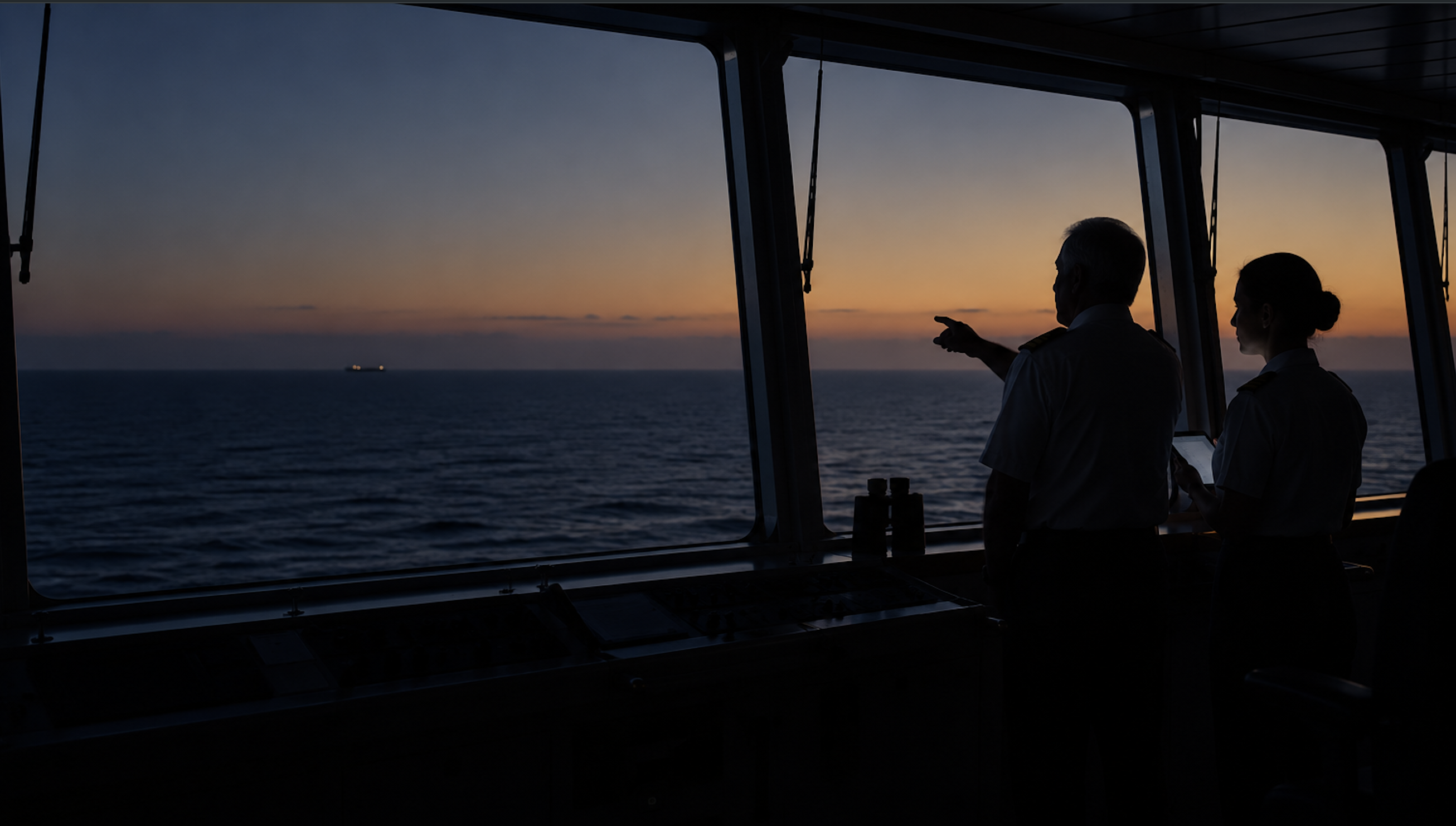
At “AI on the Bridge, Human in Command”, that tension opened up a wider discussion about how AI earns its place across a fleet. The panel brought together Torsten Holst Pedersen, Managing Director of CMA Ships; Dr. Kurt Klemme, Managing Director of Reederei Nord; Chris Greenwood, Commercial Director, West Europe & Americas at Bureau Veritas; and Yarden Gross, CEO and Co-Founder of Orca AI, moderated by Edwin Lampert, Executive Editor at Riviera Maritime Media.
The owner pays. Who gets the return?
The investment discussion soon reached an obstacle that will be familiar to anyone negotiating a charter: the company buying the technology may not receive the fuel savings.
For Dr. Kurt Klemme, that division helps explain why adoption can move slowly even when the operational benefit is understood. An owner funds the installation, the charterer pays for fuel, and both have reasons to expect the other to contribute.
Experience at Seaspan offered one way through. Where a benefit went to the charterer, the approach was to sit down and work out how to share it. The savings created room for a commercial agreement.
Safety adds another layer. Waiting for accident statistics to prove the case takes time, so owners need measures they can follow along the way. Yarden Gross pointed to high-severity close encounters as one indicator that allows fleets to track changes in navigational risk.
Fewer deviations from planned routes had also become visible during Torsten Holst Pedersen’s experience with Orca AI. On a large vessel, those deviations carry a fuel cost. An investment that began with safety was producing benefits that could be assessed in everyday operations.
For an owner considering a rollout, the practical question is how progress will be measured, and who will receive the benefit.
Every new tool makes a demand on the crew
A purchase can pass the financial test and still struggle on board.
Dr. Kurt Klemme recalled what happened when email reached vessels. A short form completed by hand became a lengthy document sent ahead of arrival. The master now spent an hour on paperwork before approaching port. Sending information had become easier; completing it had become a bigger job.
That experience gives owners a useful test for AI: what work will disappear once it arrives?
“If everything beeps with warnings all the time, the result will be that everything will be switched off,” Torsten Holst Pedersen warned. Shore teams have to exercise discipline over what they put on the bridge, including reviewing which tools can be removed.
There was a more encouraging example in the work between Seaspan and Orca AI. Reviewing port entries and departures had required considerable preparation by the shore team. Automating reports created more time for conversations with crews about what happened and how to improve.
That is a benefit an operator can recognize: time previously spent preparing a review becomes time spent helping people use it.
Crews remember the tools that were abandoned
“Don’t rush,” was Dr. Kurt Klemme’s advice on adoption.
Behind that caution was a concern about credibility. Crews are asked to learn new tools while continuing to run the vessel. If a company abandons an installation after a couple of years, it makes the next introduction harder to trust.
The experience across more than 100 Orca AI installations at Seaspan showed why training and use matter. In crew surveys, officers who used the platform were often strong advocates. Some of the resistance came from those who had decided against using it.
Trust takes repeated experience. Officers need to understand what a tool can do, see it perform during their own work, and become comfortable using it within established bridge routines.
For owners, the rollout therefore continues well beyond installation. Training, crew feedback, and continued support determine whether the investment becomes part of daily operations.
Would your master feel able to disagree?
One of the most interesting questions came from the audience. As AI recommendations become more sophisticated, will a captain feel comfortable overruling them?
The psychological pressure is easy to understand. Following a recommendation gives someone a record they can point to afterward. Challenging it means being prepared to explain why.
Chris Greenwood brought the discussion back to the company’s responsibility. There needs to be a process that allows a master to disagree without being penalized merely for doing so, including when the decision later proves wrong.
That puts “human in command” into the owner’s hands as well as the captain’s. Training must prepare officers to assess recommendations, and the company’s approach to reviewing decisions must support the judgment it expects them to exercise.
The next investment decision reaches beyond which AI tool to buy. It includes deciding how the fleet will use it, how results will be judged, and whether the master will have the company’s backing when the recommendation needs to be challenged.
Key takeaways
- Crew trust develops through training, repeated use, and tools that remain dependable over time.
- Shore teams have a responsibility to manage the workload created by new screens, alerts, and reporting requests.
- Vessel data can support fleet training when it gives teams more time to review events with crews.
- Safety investments need measurable indicators, with costs and benefits understood by owners and charterers.
- Keeping the master in command requires the confidence and organizational support to challenge an AI recommendation.