August 14, 2026

Marina Drosou, Customer Enablement Specialist
Share


I started my maritime career as a deck apprentice officer and navigation officer trainee on LNG carriers. Over 3.5 years, my work covered navigational watchkeeping, GMDSS and cargo operations, alongside safety and emergency training. Now I work in customer enablement in maritime technology.
That move from sea to maritime technology has changed the way I think about a question our industry keeps returning to: what would make more young people choose a career at sea, and what would make them stay?
The 2026 Seafarer Workforce Report from BIMCO and the International Chamber of Shipping estimates a current shortage of 39,100 STCW certified officers. By 2030, the world fleet might need an additional 113,735 officers!
A young person considering this career is trying to picture the work itself. Will the bridge help them build confidence under experienced guidance? Will life at sea leave enough room to remain connected to the people ashore?
AI and digital tools can improve that picture when they are designed around the people doing the work.
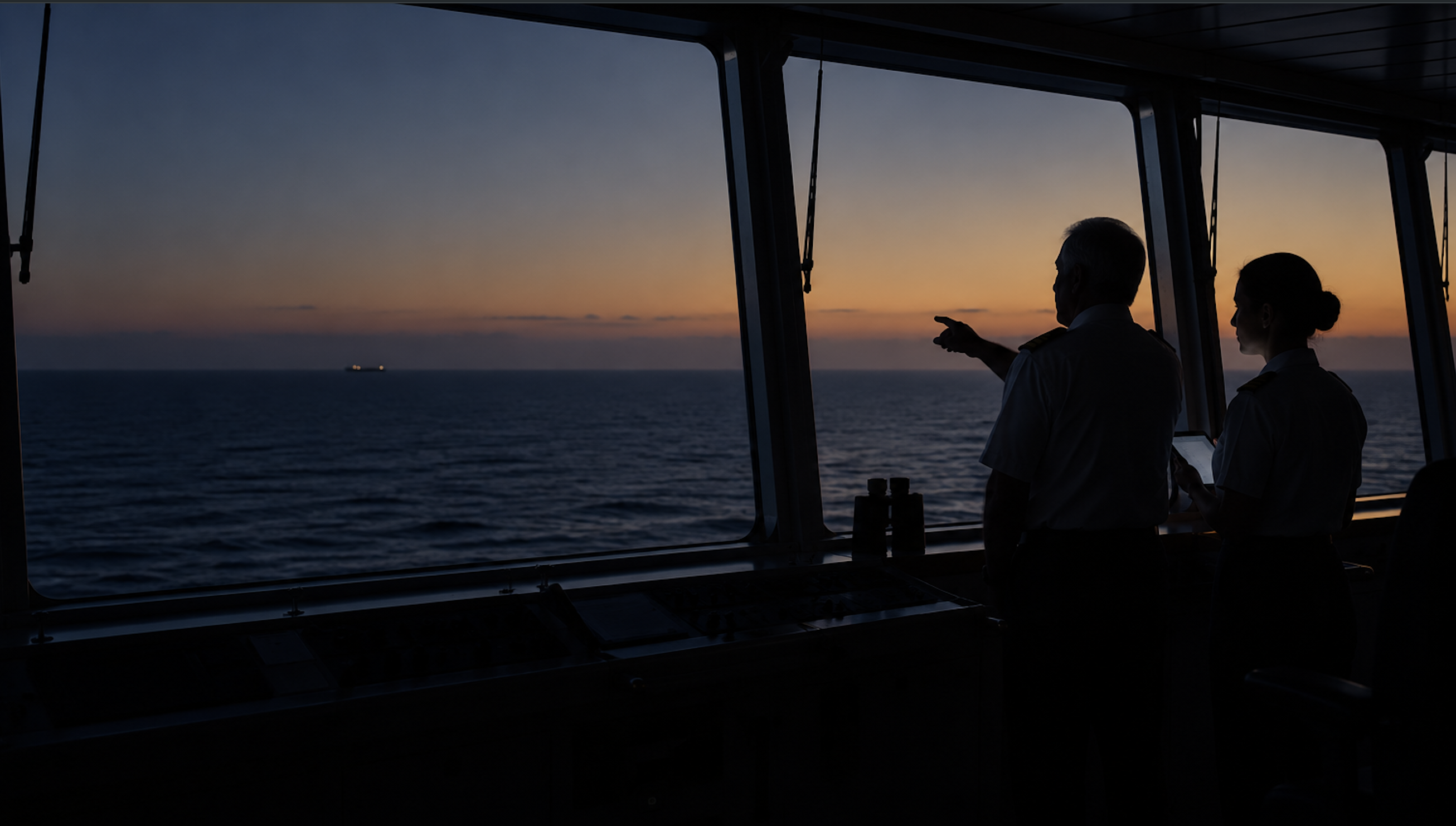
A modern bridge can protect attention

The bridge already has essential equipment, each with a defined purpose. Radar, ECDIS, AIS and the human lookout all contribute to the navigational picture. The difficulty comes when an officer has to pull that picture together while traffic and alarms compete for attention.
Lloyd’s Register research found that open sea bridge alarms had increased by 197% per hour in less than two decades. During periods demanding high concentration, peak rates reached 74 alarms per hour. The study drew on data from 65 watchkeeping officers across 15 vessels.
More information does not automatically create a clearer watch. The role I see for AI here is to organize the information already available and make a developing risk easier to spot. The officer of the watch checks the picture and decides according to the COLREGs. The master remains in command.
For a young officer, technology that helps protect attention can make a complex job more manageable without changing where responsibility sits.
Better technology can make mentorship more concrete
My training at sea was built around people. Courses and manuals gave me a foundation. Experienced officers showed me how to read a developing situation, connect the instruments with what I could see outside and understand why one decision was safer than another.
That mentor trainee relationship is one of maritime’s greatest strengths. Technology can give both people better material to work with.
A recorded close encounter can be reviewed after the watch using video and vessel track data. Looking back at the same event gives a senior officer and a cadet something concrete to discuss: What did you see at this point? Which target had your attention? When did the risk begin to change?
The recording preserves the real life event and the experienced officer supplies the judgment and context. This way, the trainee can revisit the situation without the pressure of live traffic.
Experienced seafarers carry knowledge built through years of watches and difficult approaches. Digital records can help them pass that knowledge on with greater precision, while young seafarers see how good seamanship works in practice.
Connection changes the experience of being at sea
Recruitment also depends on what happens outside the watch. Months away from family and friends can weigh heavily on someone deciding whether a career at sea is sustainable.
Faster satellite connections have already changed daily life onboard. Video calls, live sports, news and ordinary conversations with home reduce some of the distance. The Seafarers Happiness Index describes shipboard internet as one of the biggest progress in seafarer welfare in decades, while also recording continued data restrictions and limited personal time to use it.
Connectivity has a professional side too. Crews can share operational context with shore teams and receive guidance faster. Digital tools can also make approved company procedures easier to find and navigate, while the official procedure remains the authority.
For a young seafarer, that access can make a vessel feel connected to a wider professional team. It also makes the path between sea and shore more visible, with skills developed onboard carrying into fleet operations, safety, training and maritime technology.
Confidence starts before the first contract
Maritime education is beginning to reflect this environment. In June 2026, the International Maritime Organization reported that Dalian Maritime University was bringing intelligent shipping technology and digital education into its teaching. Its autonomous ready training vessel uses digital twin technology to reconstruct real scenarios for students.
The IMO’s NextWave Seafarers initiative is also addressing a barrier many cadets know well: securing the onboard training placement required to qualify as an officer. Its next phase includes training berths and an alumni network for mentorship and professional development.
Cadets need time onboard with experienced officers, alongside enough familiarity with AI assisted tools to understand their uses and limits. They need to know how to question an output, verify it against the navigational picture and keep their own judgment active.
That is how technology can strengthen seamanship across generations.
A profession young people can see themselves in
I’m still early in my maritime career, and I’ve already seen the industry from the bridge and the technology side. From that position, I see AI as part of the environment a young officer can grow into.
It can make the watch clearer, training more concrete, ship to shore support faster and life off watch more connected. Experienced seafarers remain at the center because judgment is learned from people who have carried the responsibility themselves.
If the next generation sees a profession where responsibility is matched by good tools and real mentorship, they have a stronger reason to join and stay. That is the maritime career I want us to show them.